
"HB-M5 parts"
50000 article(s) found
An introduction to the Origin Culture of Colombian Coffee
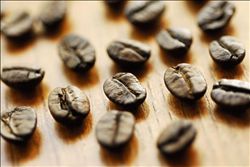
The history of coffee cultivation in Colombia can be traced back to the Spanish colonial era in the 16th century, and there are many theories about the history of coffee in Colombia: one: it is said to come from the island of Haiti in the Caribbean and from El Salvador in Central America. Second: in 1808, a priest introduced coffee beans to Colombia for the first time from the French Antilles via Venezuela. One of them

The name of the parts of the coffee machine the common sense of the use of Italian coffee machine
In 1901, Italian Milan engineer Luigi Bezzera invented the espresso machine. Italian coffee machine is a machine that uses high temperature and high pressure to make coffee quickly. According to the type of boiler, Italian coffee machine is divided into single boiler heat exchange type, double boiler type and multi-boiler type; according to the mode of operation, it can be roughly divided into: manual, automatic, semi-automatic, fully automatic and so on. And professional coffee management

Colombian Coffee Flavor Taste Manor production area introduces Hope Manor
The history of coffee cultivation in Colombia can be traced back to the Spanish colonial era in the 16th century, and there are many theories about the history of coffee in Colombia: one: it is said to come from the island of Haiti in the Caribbean and from El Salvador in Central America. Second: in 1808, a priest introduced coffee beans to Colombia for the first time from the French Antilles via Venezuela. One of them

Characteristics of the Historical Origin of Coffee Culture in Colombia
History tracing Editor Colombian Coffee Brand Colombian Coffee Brand (9) the history of coffee cultivation in Colombia can be traced back to the Spanish colonial era in the 16th century. there are also many theories about the history of coffee in Colombia: one: it is said to have come from the island of the Caribbean and by sea through El Salvador in Central America. Second: in 1808, a priest obeyed the law.

Characteristics, Origin, History and species Morphology of Colombian Coffee beans
History tracing Editor Colombian Coffee Brand Colombian Coffee Brand (9) the history of coffee cultivation in Colombia can be traced back to the Spanish colonial era in the 16th century. there are also many theories about the history of coffee in Colombia: one: it is said to have come from the island of the Caribbean and by sea through El Salvador in Central America. Second: in 1808, a priest obeyed the law.

Description of Grinding scale Flavor of Columbia Nana Linglong Coffee Bean introduction to the Origin of Manor varieties
The main varieties of Colombian coffee are small grains of coffee. Plants are small trees or large shrubs, 5-8 m tall, usually much branched at base; old branches gray-white, nodes dilated, young branches glabrous, compressed. Leaves thinly leathery, ovate-lanceolate or lanceolate, 6-14 cm long and 3.5-5 cm wide, tip long acuminate, acuminate part 10-15 mm long, base cuneate or slightly obtuse, rarely rounded, entire or

Characteristics of Columbia Coffee Bean producers Association introduction to the description of taste and flavor of Huilan Coffee Brand
Colombian boutique coffee beans introduce the variety of Colombian coffee is mainly small-grain coffee. Plants are small trees or large shrubs, 5-8 m tall, usually much branched at base; old branches gray-white, nodes dilated, young branches glabrous, compressed. Leaves thinly leathery, ovate-lanceolate or lanceolate, 6-14 cm long and 3.5-5 cm wide, tip long acuminate, acuminate part 10-15 mm long, base cuneate or

An introduction to the Historical Origin of Coffee cultivation in Colombia
The history of coffee cultivation in Colombia can be traced back to the Spanish colonial era in the 16th century, and there are many theories about the history of coffee in Colombia: one: it is said to come from the island of Haiti in the Caribbean and from El Salvador in Central America. Second: in 1808, a priest introduced coffee beans to Colombia for the first time from the French Antilles via Venezuela. One of them

90 people injured and 5 seriously injured in an explosion in a cafe in Spain
An explosion occurred in a cafe in the tourist town of Beles Malaga in Andalusia in southern Spain, injuring 90 people, five of them seriously. The explosion occurred at about 7 p.m. on the 1st, causing all the windows and doors of the cafe to be shattered, the Associated Press reported. At the time of the incident, many tourists were taking part in a festival activity near the site of the incident. Andalusia Regional Emergency Department

High-quality Sanrita Estate Coffee Bean Origin Development History Culture Introduction
Colombia coffee varieties are mainly small coffee. Plants are small trees or large shrubs, 5-8 meters high, usually multi-branched at the base; old branches are gray, nodes expand, young branches glabrous, compressed. Leaves thinly leathery, ovate-lanceolate or lanceolate, 6-14 cm long, 3. 5 -5 cm wide, apex long acuminate, acuminate part 10-15 mm long, base cuneate or slightly obtuse, rarely rounded, entire or rounded

Introduction to the flavor and taste characteristics of sweet Colombian coffee manor
The history of coffee cultivation in Colombia can be traced back to the Spanish colonial era in the 16th century, and there are many theories about the history of coffee in Colombia: one: it is said to come from the island of Haiti in the Caribbean and from El Salvador in Central America. Second: in 1808, a priest introduced coffee beans to Colombia for the first time from the French Antilles via Venezuela. One of them

Introduction to the taste of Columbia Linglong Coffee Flavor description Grinding Calibration method
The main varieties of Colombian coffee are small grains of coffee. Plants are small trees or large shrubs, 5-8 m tall, usually much branched at base; old branches gray-white, nodes dilated, young branches glabrous, compressed. Leaves thinly leathery, ovate-lanceolate or lanceolate, 6-14 cm long and 3.5-5 cm wide, tip long acuminate, acuminate part 10-15 mm long, base cuneate or slightly obtuse, rarely rounded, entire or

Introduction to the characteristics and taste of coffee flavor varieties in Manor Ireta, Panama
The Panamanian isthmus was originally a settlement of the Panama Canal of the Indian Ministry of Chibucha and the Caribbean. In 1501, Panama was colonized by Spain and belonged to the Governor of New Granada. [5] in 1821, Panama became independent and became part of the Republic of Greater Columbia. [5] in 1830, after the disintegration of the Republic of Great Columbia, it became the New Granada (later called Brother).
Grinding Calibration of Colombian Coffee beans introduction of Variety producing areas by Manor treatment
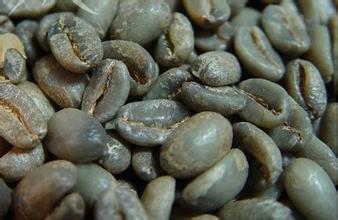
The main varieties of Colombian coffee are small grains of coffee. Plants are small trees or large shrubs, 5-8 m tall, usually much branched at base; old branches gray-white, nodes dilated, young branches glabrous, compressed. Leaves thinly leathery, ovate-lanceolate or lanceolate, 6-14 cm long and 3.5-5 cm wide, tip long acuminate, acuminate part 10-15 mm long, base cuneate or slightly obtuse, rarely rounded, entire or

Introduction to the acidity of the picking process in the production area of fine coffee beans from Huilan, Colombia
The main varieties of Colombian coffee are small grains of coffee. Plants are small trees or large shrubs, 5-8 m tall, usually much branched at base; old branches gray-white, nodes dilated, young branches glabrous, compressed. Leaves thinly leathery, ovate-lanceolate or lanceolate, 6-14 cm long and 3.5-5 cm wide, tip long acuminate, acuminate part 10-15 mm long, base cuneate or slightly obtuse, rarely rounded, entire or

The standard of SCAA pecialty Coffee boutique coffee raw beans is necessary for a good cup of coffee.
The raw bean defects of SCAA can be divided into two types: I and II. The requirement for premium coffee grade (specialty coffee) is: 1. There are no class I defects; 2. No more than 5 II class defects 3. There can be no "quaker" (0 quaker) Quick beans in cooked coffee beans. 4. The color range of raw coffee beans is pale yellow (light yellow), yellow-green (

Colombian Coffee characteristics Classification Fine Coffee Origin
The history of coffee cultivation in Colombia can be traced back to the Spanish colonial era in the 16th century, and there are many theories about the history of coffee in Colombia: one: it is said to come from the island of Haiti in the Caribbean and from El Salvador in Central America. Second: in 1808, a priest introduced coffee beans to Colombia for the first time from the French Antilles via Venezuela. One of them

Small coffee Coffea arabica Linn Arabica coffee
Small coffee Coffea arabica L. Coffea arabica Linn. Sp. Pl. one hundred and seventy two。 1753; A. Cheval. Op. Cit. 196; A. E. Haarer, op. Cit. 13; Flora of Hainan 3: 349. 1974; Atlas of higher plants in China 4: 285, figure 5929. 1975; Tree Map of Yunnan, Volume 2: 1151. 1991. Small trees or large shrubs, 5-8 m tall

Colombia Ramon Coffee Bean Flavor Description Taste Characteristics Variety Grinding Scale Introduction
Colombia Ramon Coffee Bean Flavor Description Taste Characteristics Variety Grinding Scale Introduction Colombia coffee varieties are mainly Arabica coffee. Plants are small trees or large shrubs, 5-8 meters high, usually multi-branched at the base; old branches are gray, nodes expand, young branches glabrous, compressed. Leaves thinly leathery, ovate-lanceolate or lanceolate, 6-14 cm long, 3. 5 -5 cm wide, apex long acuminate, tapering

Good news for coffee lovers: new research says 3 to 5 cups of coffee a day live longer
In recent years, drinking coffee has been regarded as one of the healthy habits. Chinanews.com, Nov. 18-according to foreign media reports, getting up every morning to drink a cup of coffee has become a part of many people's lives. And a new Harvard study shows that people who drink three to five cups of coffee a day have a 15% lower death rate than those who don't drink coffee. It is reported that in recent years, coffee has been drunk.